



Spearfishing often involves operating in open water near boats. Reducing the risk of boat and diver interaction is critical to diver safety. The following are clear, effective techniques that every spearfisher and boat operator should follow.
🧭 General Boating Safety and Emergency Preparedness
Before heading out on any spearfishing trip, you must ensure your vessel and crew are ready to respond to an emergency. This preparation can make the difference between a quick response and a life-threatening delay.
✅ Essential Safety and Communication Equipment
- Carry a working VHF marine radio and ensure all crew members know how to operate it.
- Familiarise yourself with local marine rescue or coast guard channels (e.g. VHF Channel 16 or other designated emergency channels).
- Log on and off with your local Volunteer Marine Rescue (VMR) or Coast Guard service. Inform them of your launch point, destination, and expected return time.
- Keep a well-stocked first aid kit onboard. Ideally, this should include:
- Trauma supplies such as heavy bandages and wound dressings.
- A tourniquet and pressure bandages for severe bleeding (e.g. from a boat propeller or shark bite).
- Basic first aid manual and gloves.
🚩 Use a Float with a Dive Flag
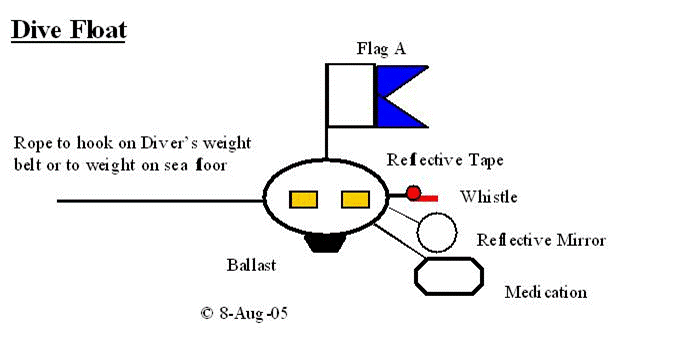
Every spearfisher should tow a brightly coloured float (yellow, orange, or red) with a dive flag, whistle, and signal mirror attached.
Why it’s important:
- Makes it easier for the boat operator to track spearfishers in the water.
- Alerts other boat users that a diver is nearby.
- The whistle and mirror are effective for drawing attention if needed.
Note: Dive flags must be clearly visible and in good condition. Pairing the flag with a brightly coloured float significantly increases visibility.
🛥️ Display a Dive Flag on the Boat
If diving from a boat, always fly a large, visible dive flag while spearfishers are in the water.
Why it’s important:
- Warns other boaters of diver activity.
- Creates a safety buffer around the vessel.
- Helps divers relocate the boat after a drift.
🧍♂️ Always Have a Boatie Onboard
Never leave the boat unattended during spearfishing activities. A dedicated person (“boatie”) should always remain on board to monitor divers and respond to any situation.
Why it’s important:
- Keeps track of divers’ movements and location.
- Can quickly respond if a diver is caught in a current or has an emergency.
- Can prevent the boat from drifting if anchor drag occurs.
- Helps pick up divers drifting in current or needing assistance.
⚓ Avoid Anchoring When Possible
Where practical, keep the boat mobile with a boatie monitoring spearfishers. Only anchor if necessary, and never leave an anchored boat unattended.
Why it’s important:
- Reduces the risk of divers being separated from a drifting vessel.
- Ensures quick response to boat traffic or diver distress.
- Allows safe pickup of divers drifting in current.
If anchoring is required (e.g. diving a wreck), spearfishers should stay within 30 metres of the boat and remain visible to the boatie at all times.
👨✈️ Ensure All Boat Operators Are Licensed
Every person operating the boat must hold a current and valid boat licence.
Why it’s important:
- Ensures operators understand safe boating rules and responsibilities.
- Maintains insurance coverage.
- Reduces the risk of mishandling in an emergency.
🛡️ Dive with Insured Spearfishers
Whenever possible, dive with spearfishers who are insured through recognised organisations such as AUF or USFA.
Why it’s important:
- Insurance provides support in the event of an accident or emergency.
- Shows commitment to responsible diving practices.
🎯 Reel Guns Must Be Used with a Float
If using a reel gun, a float must still be used. A few practical options include:
- Towing a float with a small anchor and rig line, diving and surfacing near the anchored float.
- Staying within 30 metres of a flagged, anchored boat in calm conditions.
- Diving with a buddy using a float and rig line, and remaining in close proximity at all times.
Why it’s important:
- Reel guns provide freedom, but remove your visible surface marker.
- Without a float, your risk of boat strike increases significantly.
- Using a float restores your visibility and enhances safety.
🛑 Stop the Boat When Divers Are Near
If a spearfisher dives near the boat:
- Stop the vessel immediately
- Put the motor in neutral
- Wait until the diver has surfaced before moving
Why it’s important:
- Prevents serious injury from boat propellers.
- Ensures the diver is not accidentally struck or separated.
🚤 Pick Up Divers Safely
When collecting divers:
- Approach slowly.
- Stop the boat and place the motor in neutral.
- Allow the diver to swim to the vessel.
Why it’s important:
- Greatly reduces the risk of hitting a diver with the hull or propeller.
🧭 General Boating Safety
Good planning and preparation are essential for a safe day on the water.
✅ Before You Leave
- Tell someone your trip plan and expected return time.
- Log on with your local Volunteer Marine Rescue (VMR) service.
- Carry a working marine radio and perform a radio check after launching.
🌦️ Check the Weather
- Get a local weather forecast before departure.
- Monitor conditions and plan for a return before sea breezes or changes arrive.
⚓ Check Your Anchor and Line
- Ensure your anchor, chain, and rope are in excellent condition.
- Use a setup suitable for your boat and intended dive location.
- Carry sufficient line (3 to 5 times the water depth).
- Always check the anchor underwater to confirm it’s secure and not fouled.
✅ Summary: Key Tips for Safer Spearfishing
| Safety Practice | Why It Matters |
| Float with dive flag | Keeps you visible to boats and your crew |
| Boatie onboard | Critical for diver monitoring and emergency response |
| Avoid anchoring | Reduces risk of drifting away from the boat |
| Licensed operators only | Ensures safe boat handling |
| Use a float with reel guns | Maintains visibility in the water |
| Safe boat pick-up | Prevents propeller injuries |
| Plan and log your trip | Improves response in emergencies |
SPEARSAFE CONTENTS
 Australian Underwater Federation - Spearfishing