



Blackout is one of the most significant dangers in breath-hold spearfishing, leading to serious injury or death if not properly managed. The risk of blackout increases when safe diving practices are ignored. However, by following these proven techniques, spearfishers can reduce the likelihood of blackout and improve survival chances in the event of an incident.
1. Buddy Up
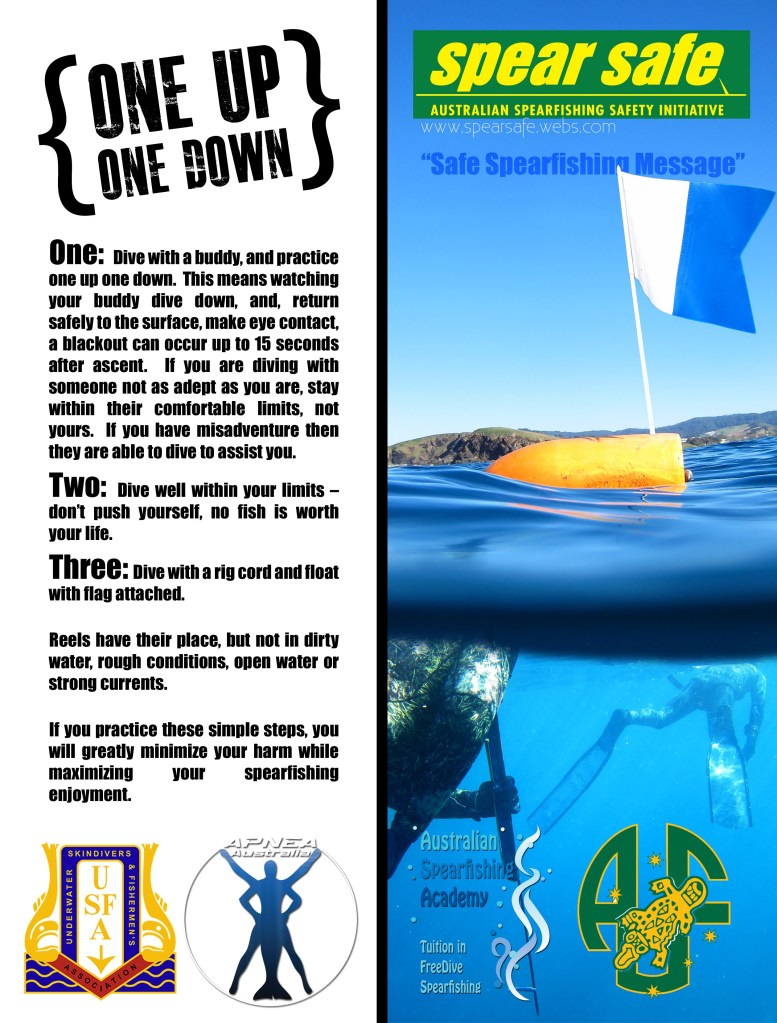
- Never dive alone. Always dive in buddy pairs, following the one up, one down rule.
- Supervise surfaced divers. Maintain direct supervision for at least 30 seconds after surfacing, as many blackouts occur shortly after a dive.
- Choose a compatible dive partner. Diving with someone at a similar skill level improves safety and coordination.
2. Weight Properly
- Adjust for neutral buoyancy at 10 meters. This ensures that in the event of a blackout, your body will naturally ascend, increasing survival chances.
- Ditch your weight belt when in danger. If you feel at risk of blackout or are involved in a rescue situation, immediately drop your weight belt to aid buoyancy and surfacing.
3. Take Your Time
- Rest at the surface for at least twice your dive time. This allows your blood oxygen and carbon dioxide levels to stabilize.
- Know when to stop diving. If you experience symptoms of hypoxia (e.g., bluish lips or skin, loss of motor control, euphoria), stop diving for the day.
- Breathe normally. Let your body regulate its own breathing rate to avoid imbalances in carbon dioxide levels.
- Stay calm. If excited or anxious, take extra care to control your breathing—adrenaline can cause unintentional hyperventilation.
4. Breathe Sensibly – Avoid Hyperventilation
- Limit pre-dive breaths to 2–3 deep breaths. More than this critically lowers CO₂ levels, delaying the urge to breathe and increasing blackout risk.
- Understand CO₂’s role. The build-up of CO₂ is what triggers your body’s need to breathe. Overbreathing before a dive suppresses this signal, making blackout more likely.
- Surface before the urge to breathe. If you feel the need to breathe while still underwater, return to the surface immediately.
5. Be Prepared
- Learn basic CPR and emergency response techniques. Knowing how to respond to a marine-based emergency can mean the difference between life and death.
By following these guidelines, spearfishers can significantly reduce the risks associated with blackout and ensure a safer, more enjoyable diving experience.
SPEARSAFE CONTENTS
 Australian Underwater Federation - Spearfishing